
West Midlands mayor declares his stance on council shake-up
By Andy Mitchell - Local Democracy Reporter 1st Apr 2026
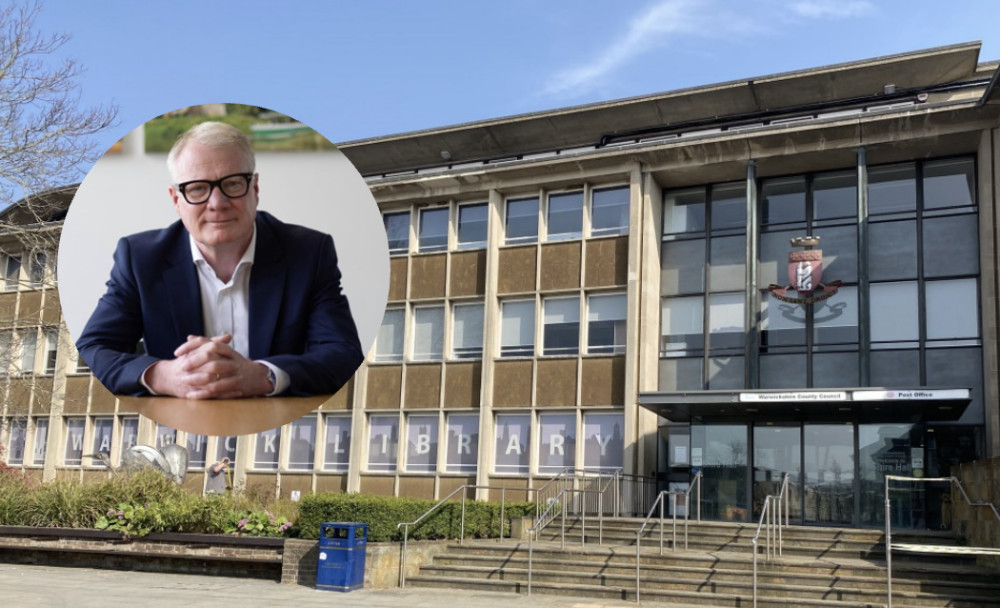

West Midlands Combined Authority (WMCA) mayor Richard Parker has backed proposals to form new two unitary councils in Warwickshire.
In a letter to the national government, Mr Parker states that the "model offers the best foundation for future collaboration with the West Midlands Combined Authority", helping to "maintain coherence across the Coventry and Warwickshire economic footprint" and avoid "fragmentation that could arise from alternative arrangements".
Warwickshire's six county, district and borough councils are set to be abolished by April 2028 as part of local government reorganisation.
Currently, Warwickshire County Council deals with the bigger services such as social care, education and highways, while the region's five districts and boroughs handle housing, bin collections, off-street parking and council tax collection.
The idea is to bring all those services under one level of local government – unitary authorities – to save money and provide clarity on who does what.
Warwickshire County Council has made the case for one county-wide unitary, a case that has been backed by Rugby Borough Council despite its reservations over the county seeking 'continuing authority' status while the new council is set up.
The other four districts and boroughs, despite being run by a mix of political persuasions, have united behind a two-unitary model covering Warwick and Stratford-on-Avon districts in the south and Rugby, North Warwickshire and Nuneaton & Bedworth boroughs in the north, an option that Mr Parker has got behind.
The letter, sent in December after a meeting with the political leads and chief executives of Warwickshire's districts and boroughs, states his belief that the two-unitary model best reflects "the distinct social and economic characteristics of the county".
Download our Nub News App!
- It’s FREE and available now- Breaking news notifications
- Your Town in Your Pocket


It continues: "The north faces significant challenges around deprivation and regeneration, while the south contends with issues of rurality, ageing populations, accessibility and housing affordability.
"Two focused authorities will be better placed to address these differing priorities effectively."
He went on counter suggestions that the split would create an unviable council in the north.
"The evidence demonstrates that both proposed unitary councils would be financially viable and comparable in scale to many successful unitary authorities across England," he continued.
"Each would serve around 300,000 residents, close enough to reflect local priorities yet large enough to deliver efficiencies.
"Research shows that councils of this size deliver more cost-effective social care and better outcomes than very large authorities. This proposal also mirrors successful reorganisations elsewhere and offers a fresh start to transform services for a generation.
"In the north, a council can focus on reducing inequalities, promoting regeneration and connecting people to growth. In the south, a council can manage good growth, improve housing affordability, reduce rural isolation and support healthy ageing.
"A single countywide authority would be too remote and risk leaving some communities behind."

There is also the question of future alliances with other regions to unlock devolution.
All six current Warwickshire councils are non-constituent members of the WMCA with limited voting rights but a number of links, particularly in relation to economic growth.
The case has been made that full membership would be best for Warwickshire but there are concerns that extending the footprint would make the WMCA too big and dilute its impact, particularly in the areas that get bolted on.
The idea of Warwickshire forming a new Mercia combined authority with Worcestershire and Gloucestershire has been floated, while there are also advocates of Warwickshire forming its own strategic authority to handle transport, economic growth and spatial planning above two unitaries – something that would not be an option if there was one county-wide unitary.
Mr Parker addressed this in writing: "I also believe this model offers the best foundation for future collaboration with the West Midlands Combined Authority, particularly in areas such as transport, housing and economic development.
"It will help maintain coherence across the Coventry and Warwickshire economic footprint and avoid fragmentation that could arise from alternative arrangements.
"This will unlock the benefits of devolution for residents and businesses and strengthen regional growth."
Download our Nub News App:
- It’s FREE and available now
- Breaking news notifications
- Your Town in Your Pocket


Share: